Deutsche Zentrale für Tourismus e.V.
Schwarzwaldstraße 25, 75389 Neuweiler
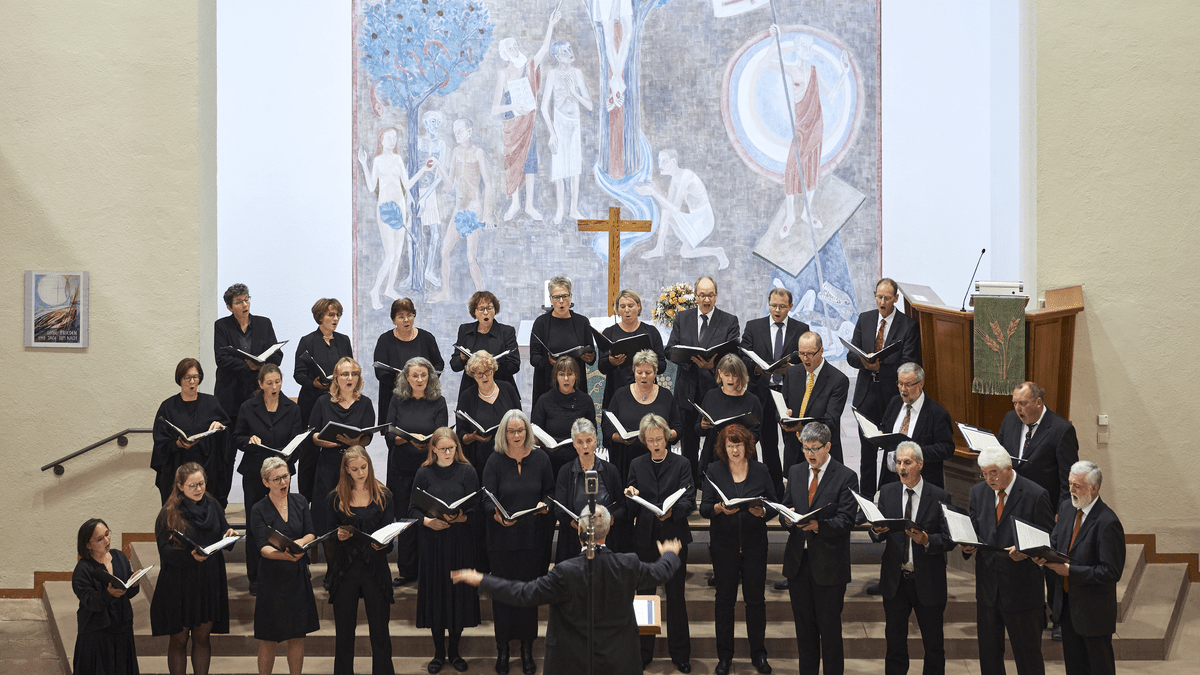
The performance will feature motets from the "Israelsbrünnlein" by Johann Hermann Schein (1623). Participants: Zwerenberger Vocal Ensemble, Barbara Noeldeke (Baroque cello), Mika Stähle (positive organ) Conducted by: Ulrich Seeger Zwerenberger Church Concerts On Sunday, October 5, 2025, at 6:00 PM, there will be a spiritual concert with the Zwerenberger Vocal Ensemble at the Evangelical Church in Zwerenberg. Ulrich Seeger has selected motets from the "Israelsbrünnlein" by Johann Hermann Schein for the traditional autumn concert. The "Israelsbrünnlein" by Johann Hermann Schein, the most significant Thomaskantor before Johann Sebastian Bach, represents one of the most important collections of motets in 17th-century German music, alongside the sacred choral music of Heinrich Schütz. Among the 26 compositions, most are set to Old Testament texts, which gave the collection its name. The motet collection, published in 1623, is modeled after the Italian "Madrigale spirituale," and Schein leaves no expressive possibility unused to imbue his pieces with rich drama. Thus, highly emotional music was created that expresses the content of its texts in a close word-tone relationship. The composer Johann Hermann Schein was a contemporary of Heinrich Schütz, with whom he shared a lifelong friendship. Together with Samuel Scheidt, he was one of the three great "Sch" composers who significantly shaped the music of their time. In 1593, Schein became a choirboy in the Dresden court chapel. Later, he received a scholarship at the monastery school in Pforta near Naumburg. After school, he began studying law but soon abandoned it to devote himself entirely to music. He initially became the court conductor in Weimar and, by the age of thirty, was appointed Thomaskantor in Leipzig. The Zwerenberger Vocal Ensemble, founded in 1983 by its artistic director Ulrich Seeger, has made a name for itself far beyond its home region in the Northern Black Forest over its more than 40 years of existence. In particular, the breadth of the repertoire, ranging from early Baroque works with original instruments to the grand symphonic oratorios and masses of the 19th and 20th centuries, has consistently resonated with audiences. Concert tours have taken the vocal ensemble to Tuscany, Barcelona, Madrid, Istanbul, Venice, Salzburg, and most recently to Schleswig, Lübeck, and Schwerin.