Deutsche Zentrale für Tourismus e.V.
Berliner Platz 1, 74072 Heilbronn
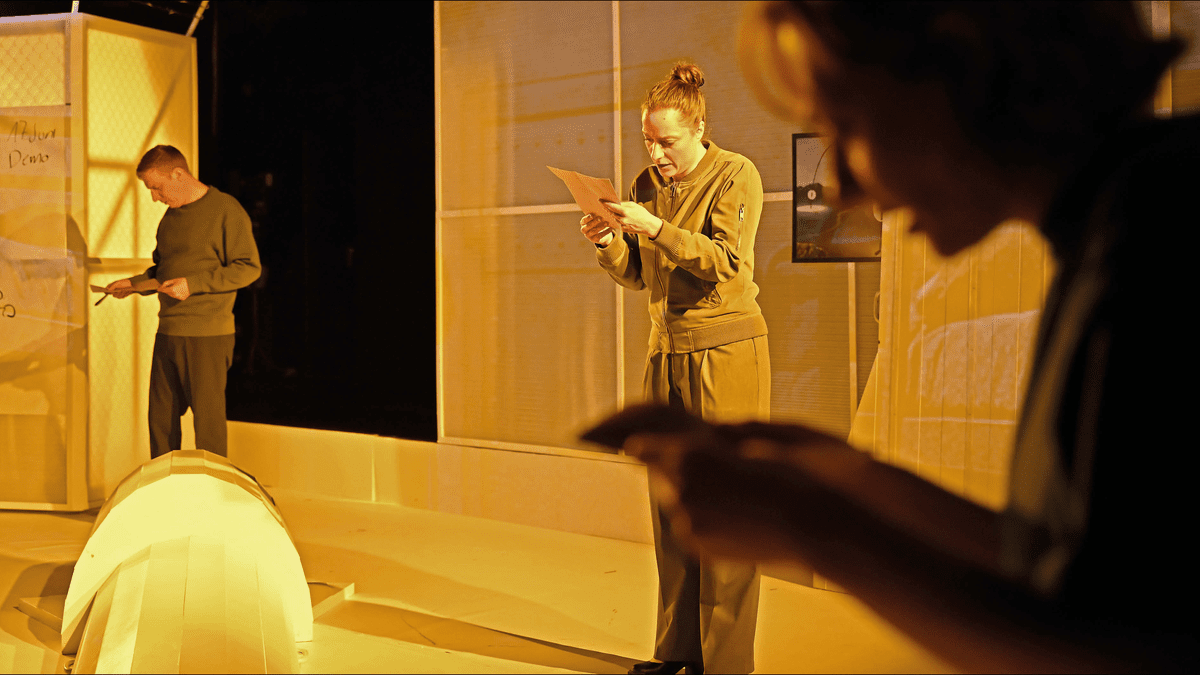
The documentary theater project examines the background and consequences of this significant event in Heilbronn's city history—always with an eye on our present. This results in a play specifically for the city of Heilbronn, which relates local conditions to the reality of West Germany then and now. In cooperation with the Heilbronn City Archive, January 11, 2025, marks the 40th anniversary of the Pershing accident at Heilbronn's Waldheide. It was this event, in which three American soldiers were killed and 13 others were injured, some severely, that briefly made the city the center of the West German peace movement of the 1980s. The explosion of a Pershing II missile engine in close proximity to the nuclear warheads stored at Waldheide not only startled the residents of Heilbronn. Thousands of people demonstrated on February 2, 1985, with a silent march from Heilbronn to Waldheide against the deployment of missiles, and starting on February 8, an indefinite blockade of the Pershing site began. Suddenly, it became clear to everyone how quickly a catastrophe could occur in the immediate vicinity of the city. Just under two weeks after the accident, the Heilbronn city council, which had previously been prohibited from addressing the "Waldheide missile site" for years, unanimously decided to eliminate it. Consequently, the citizens of Heilbronn demonstrated together with local and regional peace activists, as well as prominent representatives of the peace movement, against the immediate effects of the NATO double-track decision. The protests took on such alarming forms for those responsible in politics that the then Minister of Defense, Manfred Wörner, came to Heilbronn on April 25, 1985, to calm the population—without success. The protests ultimately ended only with the signing of the INF Treaty in 1987. Since then, so much has happened. Two years after the accident, the great powers mutually assured their disarmament efforts in the INF Treaty, and nearly five years later, the Berlin Wall fell. The end of the Cold War was foreseeable and was ultimately manifested by the collapse of the Soviet Union in 1993. Suddenly, it seemed—at least for a short time—that a world was conceivable that did not operate under bipolar power relations, an open, peaceful world where diplomatic relations and mutual trust had replaced the arms race between the great powers. A utopia that was destined to be short-lived. The commemoration of the day of the Pershing accident at Heilbronn's Waldheide serves as the starting point for dura & kroesinger's research project. How did the deployment of the Pershing II missiles in Heilbronn come about as part of the NATO double-track decision? What did the city politics know about it, and why was the population not informed about the missile site? What significance did the missile deployment and the Waldheide accident have for Heilbronn? And what traces have the accident and its consequences left in Heilbronn's civil society? The documentary theater project examines the background and consequences of this significant event in Heilbronn's city history—always with an eye on our present. Thus, a play specifically for the city of Heilbronn is created, which relates local conditions to the reality of West Germany then and now. A research project for the 40th anniversary of the Pershing accident at Heilbronn's Waldheide by dura & kroesinger.