Stadt Langenau
Jahnstraße 8, 89129 Langenau
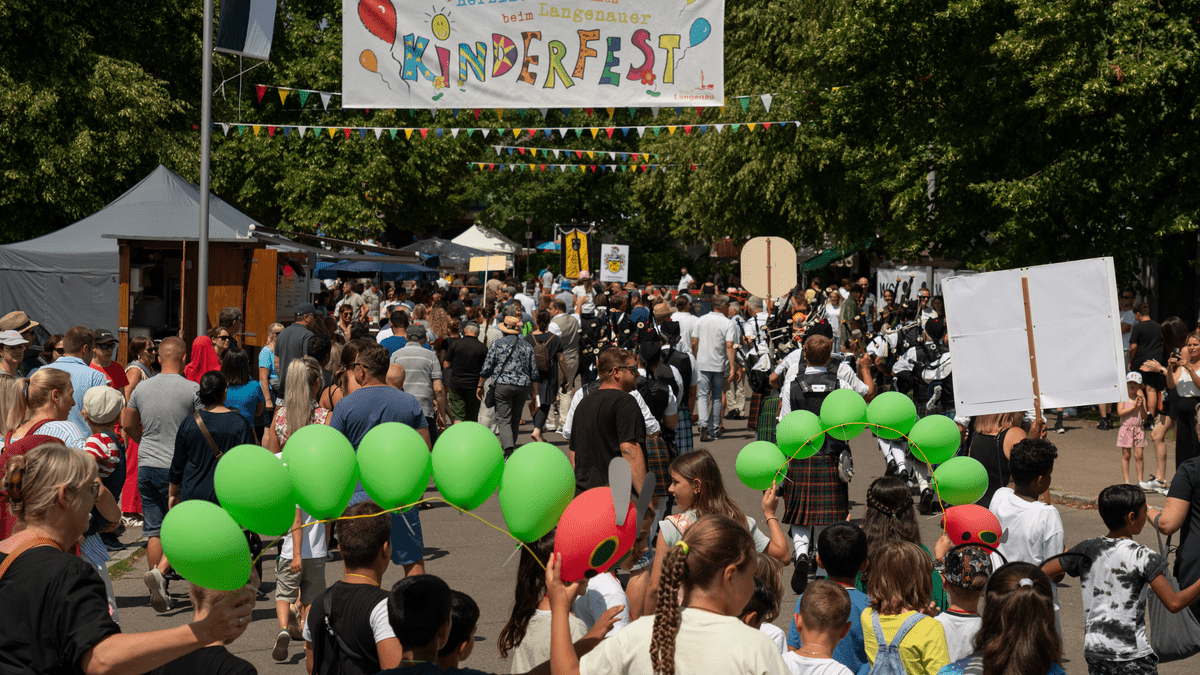
*Every year, on the last weekend before the summer holidays, we traditionally welcome visitors to the Langenau Children's Festival.* Nowadays, the Children's Festival takes place annually on the last weekend before the summer holidays, and the "Auf der Reutte" festival grounds have established themselves as the new traditional venue. The big school parade is an absolute highlight of the Children's Festival and leads up to the festival grounds. On Saturday and Sunday, young and old alike can celebrate.
Clubs, schools, and the cultural office organize the event together, ensuring that young and old alike have a wonderful time year after year. The festivities begin on Friday, July 24, with a festive reception. This takes place at 7:00 p.m. in the Pfleghof as an open-air event to kick off the festival weekend. In case of rain, the celebration will be moved to the Pfleghofhalle. On Saturday, July 25, the actual children's festival begins with the school parade at 1:30 p.m. in Freistegstraße, which will lead through the city to the festival grounds on the Reutte. On Sunday, July 26, the celebrations will continue there from 11:00 a.m.
**History of the children's festival** With a new theme each year, the children's festival goes back to the centuries-old tradition of the Schulertanz (school dance) and is a hit with young and old alike. First mentioned in the minutes of the church visitation of 1535, the "Schulertanz" always took place on the Wednesday before Pentecost. On the morning of the festival, the children gathered in front of the schoolhouse on the Ach and marched to the church accompanied by music. After the festive service, the children, holding decorated birch trees, known as "Maien," marched to the festival grounds in the castle courtyard. In the shade of the lime trees, the children then performed their dances. The adults also took the opportunity to dance. Guests from the surrounding villages were also welcome. The community continued to observe the traditional day and festival site until the 19th century.