Heilbronn
Berliner Platz 1, 74072 Heilbronn
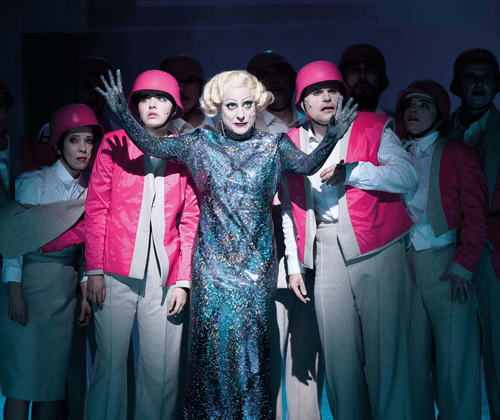
With merciless wordplay and bitter satire, Karl Kraus exposes the inhumanity and absurdity of war.
The most improbable deeds reported here actually happened; I have merely depicted what they did. The most improbable conversations recounted here were spoken verbatim; the most outlandish inventions are quotations …
This is what Karl Kraus, one of Austria’s greatest publicists and writers, writes right in the preface to his monumental drama “The Last Days of Mankind,” in which he grapples with World War I. What makes it unique is that Kraus does not focus on the hell of the front lines. Rather, the focus is on those who, from a safe distance in the rear, experience, follow, cheer on, and profit from World War I. The tragic and the absurdly comic go hand in hand. Over a quarter of the text consists of original material from newspapers, military daily orders, court proceedings, letters, sermons, and conversations among his contemporaries. This is not a linear narrative but rather 220 scenes featuring real-life figures. Among them are Emperors Franz Joseph and Wilhelm II, soldiers, pastors, journalists, newspaper subscribers, and many more. The quotations reveal thoughtless ruthlessness, stupidity, and hypocrisy. With merciless wordplay and bitter satire, Karl Kraus exposes the inhumanity and absurdity of war.
We meet war correspondents who seek to boost their media outlets’ circulation through descriptions as sensational as possible, and witness business owners who fear peace because they reap huge profits from the war. Officers are paraded as they feast in safety while their soldiers starve and freeze to death. The scenes are linked by two characters who comment on the events through debates. The Optimist advocates for war: “The good become better, and the bad become good. War purifies.” The Grumbler, through whom Karl Kraus voices his own position, detests war: “It robs the good of their faith, if it does not take their lives, and it makes the bad even worse.” According to the Grumbler, one of the worst illusions about war lies in talk of its regenerative power and the belief that civilization will emerge renewed from the catastrophe.