TOURDATA
Kirchenplatz 13, 4910 Ried im Innkreis
The association dedicated to the care and promotion of nativity scenes, as well as the Holy Graves on a religious, artistic, and folkloric basis, was founded in January 1956. The traditional nativity scene regions in Upper Austria are the Salzkammergut and the area around Steyr.
In the well-known landscape nativity scenes of the Salzkammergut, the depiction of the Christmas story is intertwined with the breathtaking Alpine backdrop. The artistically crafted figures and settings reflect not only the religious narrative but also the regional aesthetics and craftsmanship.
In the region around Steyr (Enns and Steyr valleys), specific forms of nativity scene construction have established themselves, such as the so-called nail smith nativity scenes with the famous Loahmmandeln. These regionally influenced styles combine local craftsmanship with a popular interpretation of the Christmas story.
In addition to these two main areas, other regions, such as parts of the Innviertel, also played a role. There, nativity scenes were often created by well-known artists who depicted masterful figures and scenes in their workshops.
With the establishment of the Upper Austrian Nativity Scene Construction School in Geboltskirchen, a renaissance of nativity scene construction has been initiated among the Upper Austrian nativity scene enthusiasts. Through comprehensive training of nativity scene masters, the art of nativity scene construction has been significantly enhanced based on both old and modern motifs, forgotten traditions have been revived, and artistic designs have been passed on to the next generation. The goal of the state association to preserve Christian cultural heritage and to convey the associated values to the youth is exemplary realized by the individual local organizational units. The anniversary exhibition aims to inspire the population for nativity scene construction across the state and to lay the foundation that every family, alongside the Christmas tree, also sets up a nativity scene with the message from Bethlehem.
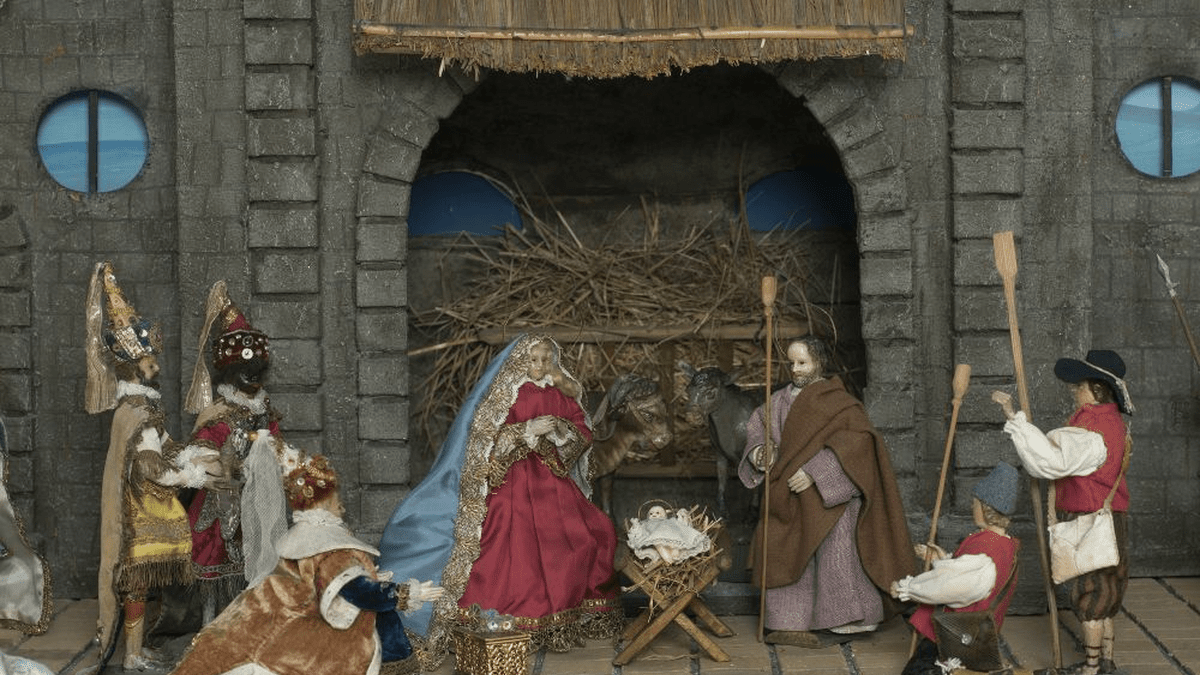
The history of the Ried Museum is closely linked to the theme of the nativity scene: When the famous Kögl nativity scene by Johann Peter Schwanthaler the Elder was to be sold in 1910, some citizens founded the Ried Museum Association. Initially, there was no exhibition opportunity for the rapidly growing collection. This changed when, in 1933, Pastor Johann Veichtlbauer bequeathed his collection of religious folk art to the city of Ried on the condition that it be made permanently publicly accessible in its own building, the Innviertel Folk Culture House. Thus, the nativity scene came to Ried, in front of which the famous Christmas carol "Silent Night! Holy Night!" was first sung in 1818.
Exhibition duration: until January 31, 2026
Opening hours: Tue - Fri 9 - 12 & 14 - 17, Sat 14 - 17
Closed on Sun, Mon & holidays