Deutsche Zentrale für Tourismus e.V.
Eisenhüttenstraße, 38239 Salzgitter
On the second Saturday of the month, the memorial site is open to visitors between 3:00 PM and 5:00 PM without prior registration. However, please check the Corona page on the memorial's website for current information, fill out the data control form in advance, and bring it with you. No guided tours will take place. Dedicated members of the Historical City Association are present on-site and available for questions. If you would like a guided tour: The exhibition can also be visited as part of a guided tour by arrangement. Please contact: besuch@gedenkstaette-salzgitter.de
Current part of the exhibition: The development of the memorial is currently being showcased until August 2024 through an exhibition at the memorial featuring graphic novel drawings created during this year's trainee seminar for the memorial hour.
Concentration Camps in Salzgitter: In 1942, the SS and the Reichswerke for ore mining and ironworks "Hermann-Göring" established the KZ-Außenlager Drütte. More than 3,000 prisoners from France, the Netherlands, Poland, the Soviet Union, and other countries were housed under an industrially used elevated road on the factory premises. They were forced to produce grenades and bombs in the armaments factories. In 1944, additional camps were established: the KZ Watenstedt/Leinde and the KZ Salzgitter-Bad.
The Memorial KZ Drütte: Until the 1980s, the history of the concentration camps in the Salzgitter area was largely suppressed and forgotten. It was only in connection with the 40th anniversary of the city in 1982 that a public discussion began. In 1983, citizens founded the Historical City Association. Together with the works council of the steelworks and many other interested parties, the association advocated for the establishment of a memorial on the factory premises. On April 11, 1985, the works council organized the first memorial ceremony at the historical site, which has since been held annually at the former assembly area. In 1992, the corporation made one of the four accommodation rooms available as a memorial. On April 11, 1994, the memorial and documentation site KZ Drütte was opened. The design and management were taken over by the Historical City Association.
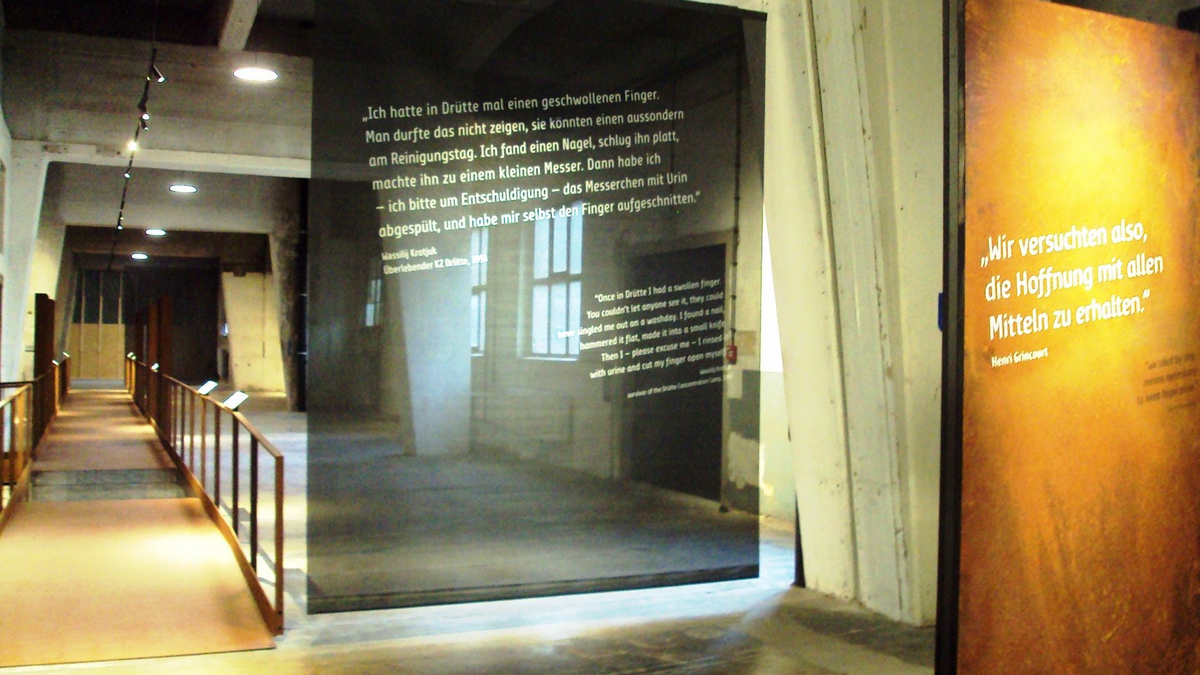
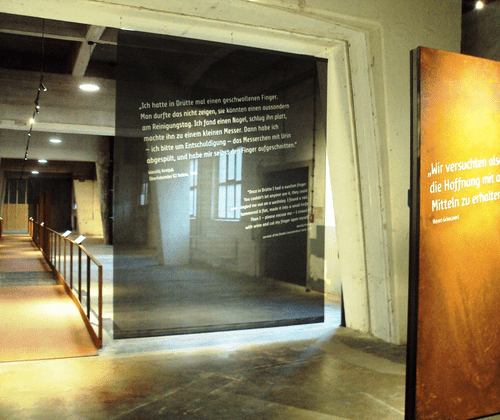
The Permanent Exhibition: At the memorial KZ Drütte, history confronts the visitor in a very direct way, allowing for a lively engagement. The themes of National Socialism, the founding history of the city of Salzgitter, post-war history, and the question of memory culture can be approached from different perspectives here: factual texts, photos, and documents introduce the topic, while statements from former prisoners are an essential part of the exhibition. They restore names and identities to the prisoners, transforming an anonymous mass back into individuals. Seminar rooms and technical equipment allow for more in-depth engagement, and a comprehensive archive and library complement the offerings.