Tuttlingen
Rathausstr. 7, 78532 Tuttlingen
In his work, artist and biologist Sebastian Marokko Walter combines scientific and artistic research in fields such as neurobiology and the psychology of perception, archaeology and anthropology, ecology, and diversity.
In ecology, the term “zoenosis” refers to a community of living beings that interact with one another. The installation ZoeNosen explores non-human communities in an environment shaped by humans.
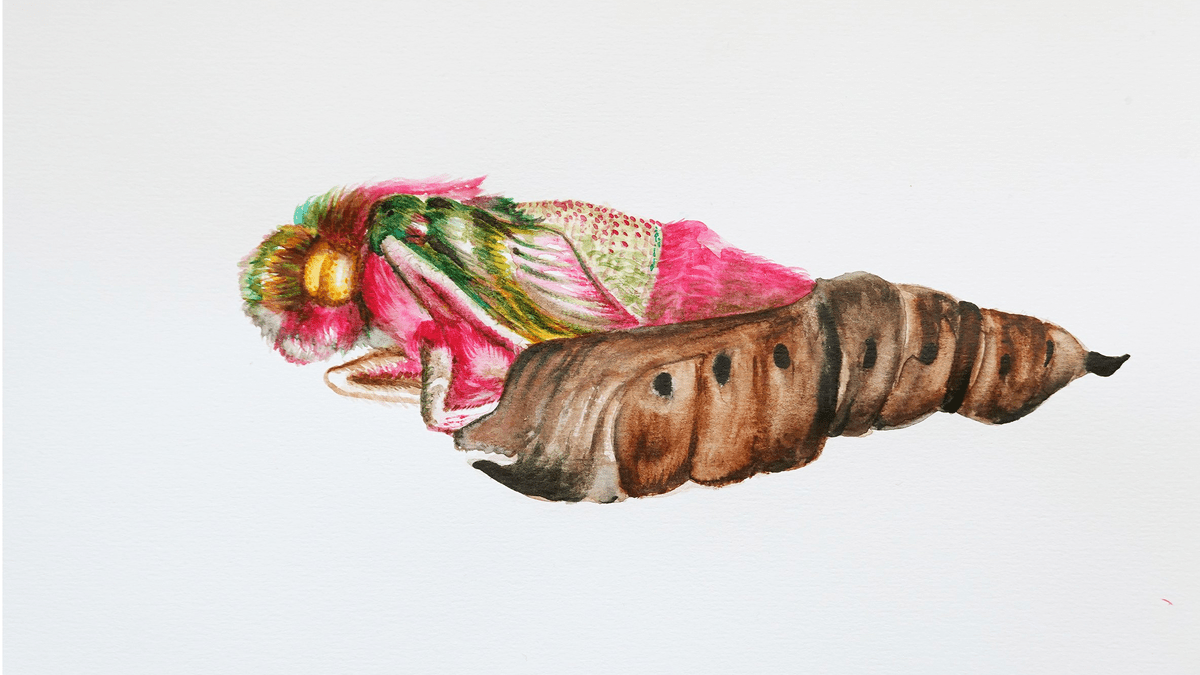
Since 2018, Sebastian Marokko Walter has been documenting wild plants in urban spaces and the animals—primarily insects—that visit, utilize, and/or support them. To this end, he employs various artistic media—painting, drawing, photography, film, sound recordings, sculptural techniques, light, texts, and collages. Central works in the exhibition are spray-painted plant portraits and photographs of the wildlife associated with these plants, which are interwoven with other documents to form spatial objects.
The installation at the Tuttlingen City Gallery places these fragile communities at the center of a history of life, from its beginning to a possible (provisional) end.
Sebastian Marokko Walter, who lives in Berlin, was born in 1968 in Schwenningen am Neckar. After studying biology and fine arts at the University of Hohenheim and the Academy of Fine Arts in Stuttgart, he initially conducted research in the field of neuroscience in New York, Magdeburg, and Giessen, followed by national and international fellowships and grants in the field of fine arts. Since 2012, he has been using scientific and artistic methods to explore connections between humans and non-human beings from the Stone Age to the present day—in collaboration with, among others, the German Archaeological Institute, the Goethe-Institut, the Heinrich Böll Foundation in New Delhi, and the National Centre for Biological Sciences in Bangalore.