Heilbronn
Berliner Platz 1, 74072 Heilbronn
Singspiel by Hans Müller and Erik Charell | based on the comedy by Oskar Blumenthal and Gustav Kadelberg
Music by Ralph Benatzky with musical interludes by Robert Gilbert, Bruno Granichstaedten, Robert Stolz, and Hans Frankowski | Lyrics by Robert Gilbert
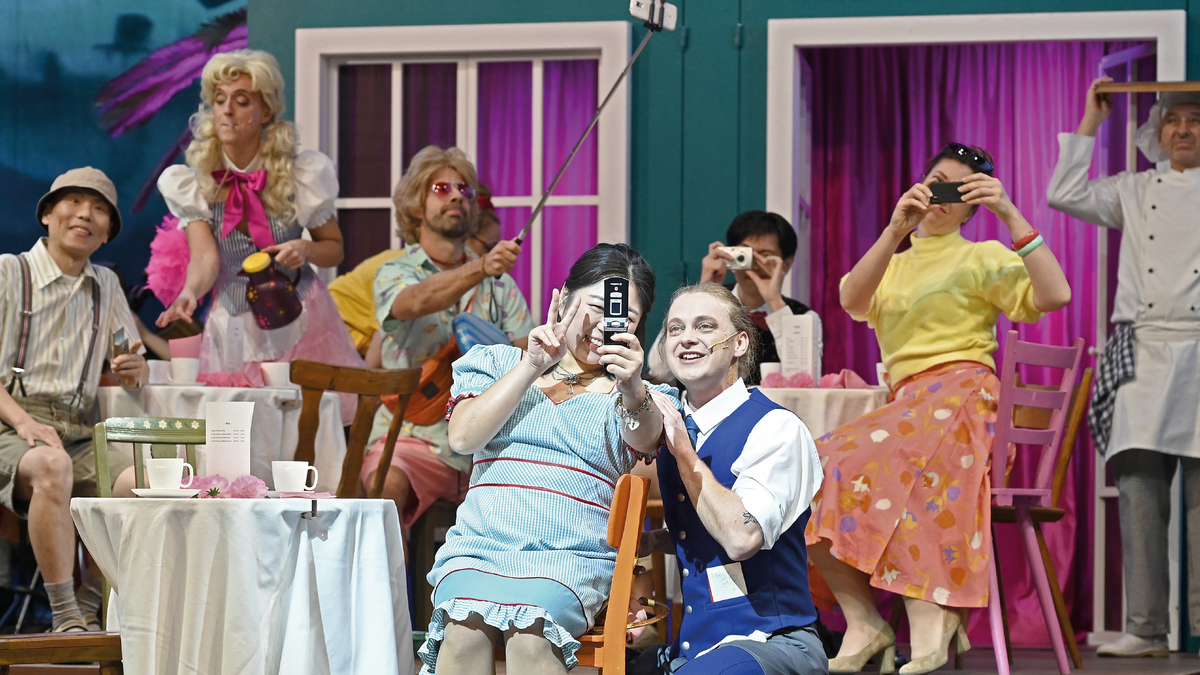
Where better to spend a vacation than at the tranquil "Zum weißen Rössl" inn on Lake Wolfgang? Nowhere! The loyal regulars of innkeeper Josepha Vogelhuber all agree on that. But behind the idyll of the Salzkammergut, confusion, disputes over the best hotel rooms and company patents, unhappy love stories, and raging jealousy drive the action. The head waiter Leopold, madly in love, tries in vain to win the favor of his boss, the innkeeper Josepha Vogelhuber. He has to watch as she flirts with her regular guest, the lawyer Dr. Siedler. He, in turn, is very interested in Ottilie, who has just checked into the "Weisses Rössl" with her father, the notoriously bad-tempered Berlin knitwear manufacturer Giesecke. Ottilie, however, is supposed to marry Sigismund Sülzheimer,
the son of Giesecke’s fiercest competitor, in order to finally put an end to the bitter dispute between the two companies over the patent for men’s shirt-pants. The handsome Sigismund has no intention of putting his love life at the service of his father’s business and instead pursues the charming Klärchen, the daughter of the unworldly Professor Hinzelmann. Chaos reigns, and Leopold’s hopes for Josepha suffer a severe setback when he sees her standing next to Dr. Siedler upon the Emperor’s arrival. When Leopold also receives his dismissal papers, it seems all is lost. But thanks to the Emperor’s intervention, everything comes to a happy conclusion.
On November 8, 1930, “The White Horse Inn” enjoyed its glittering premiere at the Großes Schauspielhaus in Berlin. The Singspiel was anything but a harmless sentimental ditty. It was an irreverent, frivolous piece of musical theater born of the spirit of the Roaring Twenties, and in every respect an extraordinary undertaking that was to thoroughly shatter the boundaries of the old European operetta. Today, “The White Horse Inn” is considered one of the most famous examples of Berlin operetta and a precursor to the German musical. The work was later banned in Nazi Germany because of its Jewish co-authors and its irreverent treatment of folklore. The revue survived abroad: in London, the show ran for over 650 consecutive performances. And in New York, “The White Horse Inn” was a Broadway hit in 1936 with 223 performances. A steady stream of wonderful melodies, hilarious and slightly risqué humor, a touch of sentimentality, and delightfully quirky characters—that’s what makes it so charming to this day. To this day, audiences still gladly accept the invitation from the title song: “At the White Horse Inn on Lake Wolfgang, happiness stands at the door. It calls out to you: Good morning! Come on in and forget your worries!”