Touristik Information Münsingen
**“The Ant’s Song to the Moon”** (a play on retrofiction)
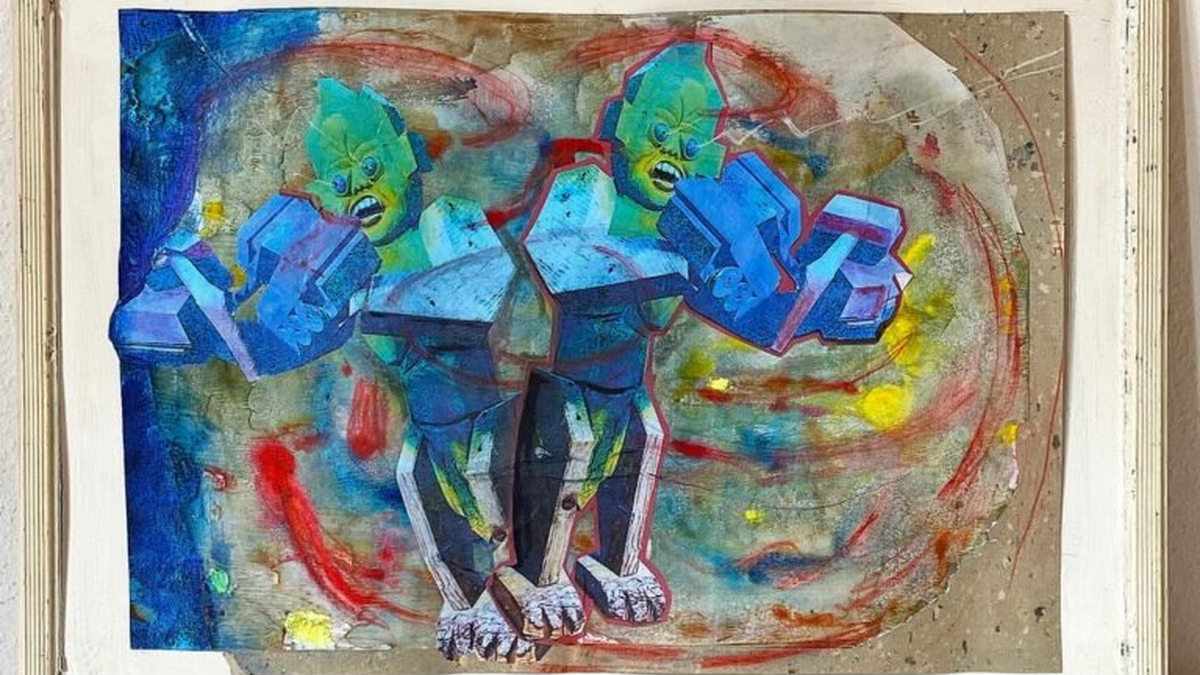
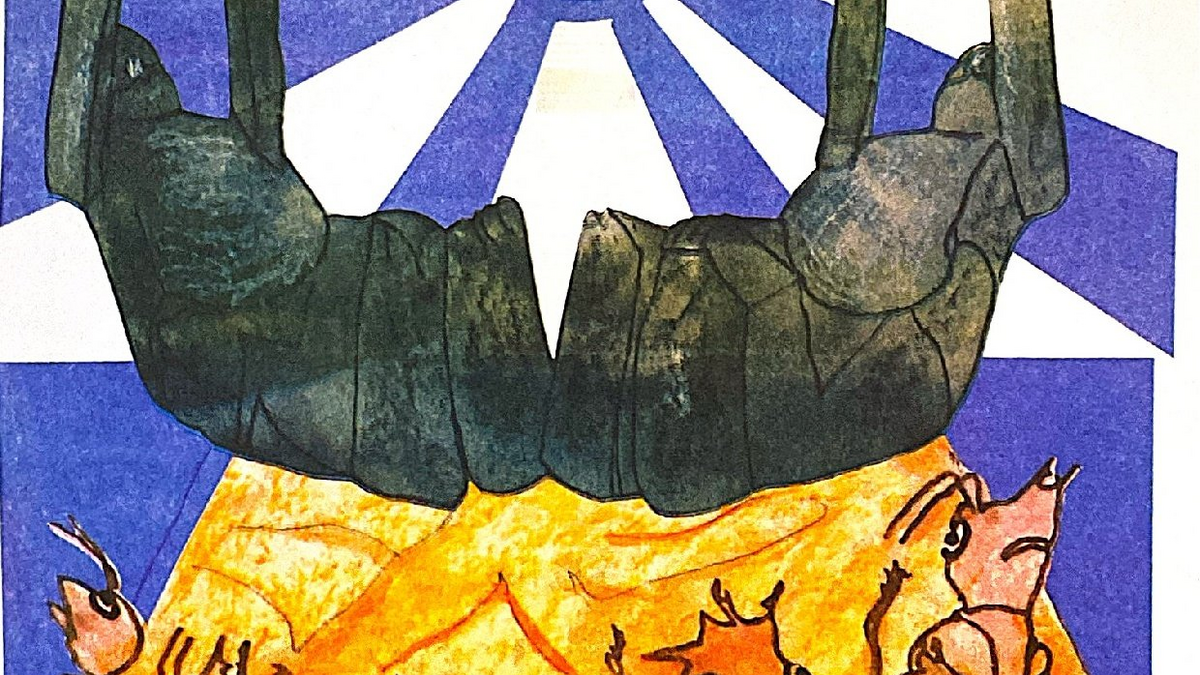
Its theme is the “infinite” present. As long as Edgar Braig collages, assembles, and plays, “he thus outwits the will through the act of making” (Braig). By incorporating himself—as a first-person narrator, so to speak—Braig playfully engages in a timeless exploration of the themes of family, history (especially art history), myth, and fairy tales. He champions the anarchic element in the visual arts as a realm of resistance and consistent outsider status. In doing so, he acknowledges that even art has no effective solutions for so-called reality. “I don’t cling to false hopes but fiddle, snip, dab, and glue” (Quote from Braig).
Edgar’s works, so to speak, open the floodgates of our own memories and associations and activate the *turbo mode* of art appreciation. One could also say: they challenge us in a pleasant way, because “*art doesn’t have to hurt*,” as Braig says. While he finds, rescues, collects, preserves, copies, remembers, and transforms—we, the viewers, do our part when, in encountering his work, we open our memory banks, recognize things, suspect meaning or nonsense, and try to interpret and categorize the works based on their titles… *if we want to read into them, then please in every direction!*
Edgar Braig flirts with *trashiness*, employing it deliberately—yet if you look closely, a sensitive aesthete is (also) at work in this look of eclectic stylistic incongruities; despite cable ties, Spax screws, and duct tape, his works are often technically sophisticated, and he screws, welds, glues, and saws—and even calculates an angle when the subject demands it—but if *higher powers command: break off the top right corner!* then he will do just that. Because: *everything is possible, if it’s meant to be.* Edgar Braig is a full-time, hard-working all-around artist, and he says something very fitting about his approach: “*Just go a little too far and take a look around there.*”