TOURDATA
Rathausplatz 1, 4810 Gmunden
The custom of "Glöckeln" on the eve of Epiphany is an ancient pre-Christian tradition of noise and light aimed at driving away the evil spirits of winter. This custom originated in the Salzkammergut region. The "Glöckler" run through the Rauhnacht (the nights between Christmas and Epiphany) from January 5th to 6th in their white garments, which are meant to represent the spirits.
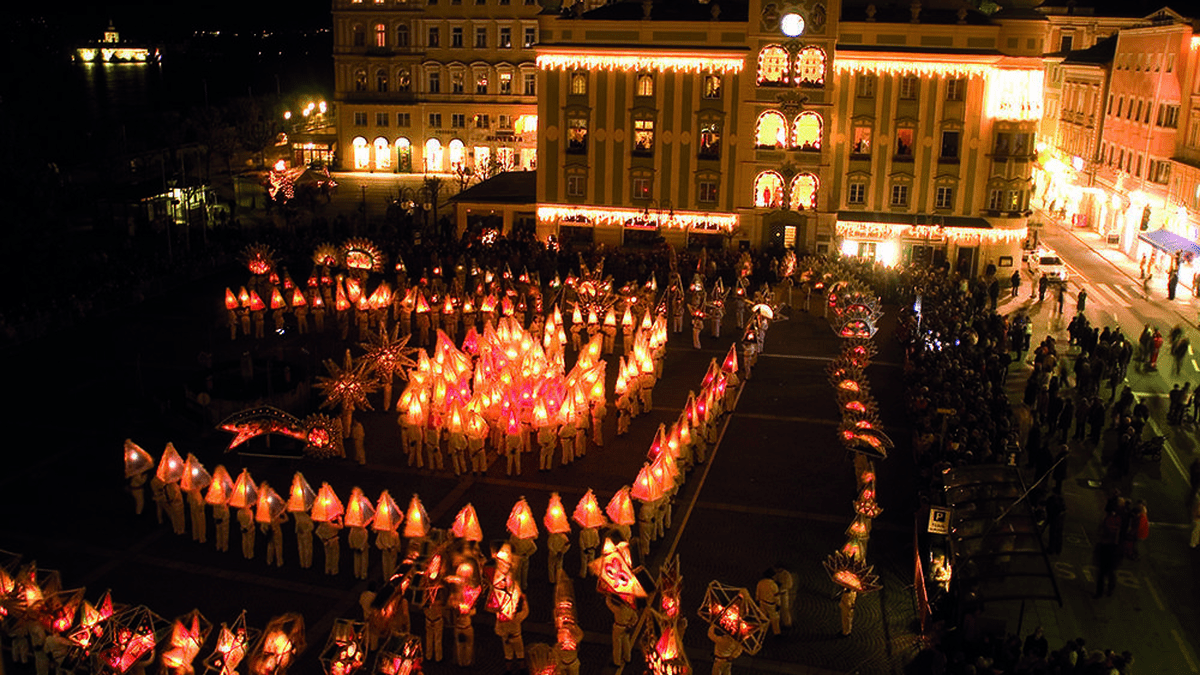
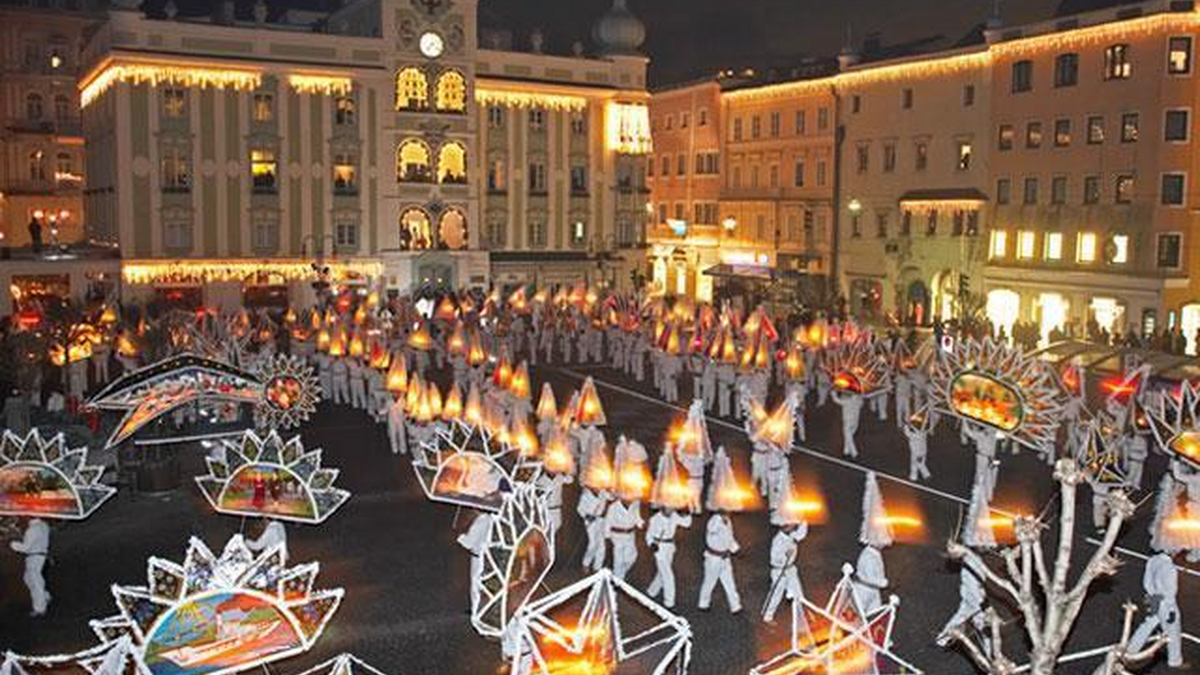
In several towns in the Salzkammergut, such as Ebensee, Gmunden, and Bad Ischl, groups of about twenty Glöcklers, known as "Passen," run in specific formations like circles, eights, spirals, and others under the leadership of a "Spion" (spy). The Spion, as the leader, determines the formations that his "Paß" will perform. With a long stick in hand, he clears the way; in the past, this stick was also used to knock ("klocken") on doors and shutters. The clothing of the Glöcklers is white; a bell is attached to a wide belt, which rings through their running and dancing movements. On their heads, the Glöcklers wear light caps, known as "Glöcklerkappen." These consist of a framework of thin rods covered with translucent paper, onto which ornaments, symbols, figures, scenes, or landscapes are glued. These often star-shaped, artistic structures—sometimes resembling a building, a ship, or a coat of arms—can weigh up to 15 kg and are often crafted by the Glöcklers themselves over months of work.
Ernst Burgstaller describes the Glöckler running in his 1948 book "Lebendiges Jahresbrauchtum in Oberösterreich": "... For a long time, the sound of bells can be heard over the dark, snow-covered streets, which are only sparsely illuminated by a few lanterns, until finally the 'Spion' appears in the square, followed by a group of white-clad 'Glöckler.' With their huge, internally illuminated headgear, the 'Glöcklerkappen,' they present a wonderful sight as they all move in perfect step, tracing their paths, their sun-calling circles, spirals, and eights, while their hoods—stars, semicircles, pyramids, and drums—shine and glow, magically illuminating the dark night. Thus, they run in Ebensee, Gmunden, Altmünster, Traunkirchen, carrying the new young light through the night to the fields and into the homes of the people. And it is a common belief that the coming year will be all the more fortunate the more Glöcklers race through the place..."
The name "Glöckler" derives from "Klocken," which means to knock or tap. In front of the yards or houses they wish to honor, the Glöckler groups run in circles, spirals, and other formations. According to ancient belief, their stomping and ringing are said to awaken the buried grain under thick snow and ice to sprout. As a traditional gift, the Glöcklers receive the so-called "Glöcklerkrapfen" for their visit.
Schedule:
6:10 PM Tower blowing from the town hall
6:20 PM Arrival of the Three Holy Kings by ship with entourage, procession through the town hall square, and singing of Epiphany songs on the town hall loggia
6:45 PM Arrival of the Glöckler groups, joint figure jumping and singing.